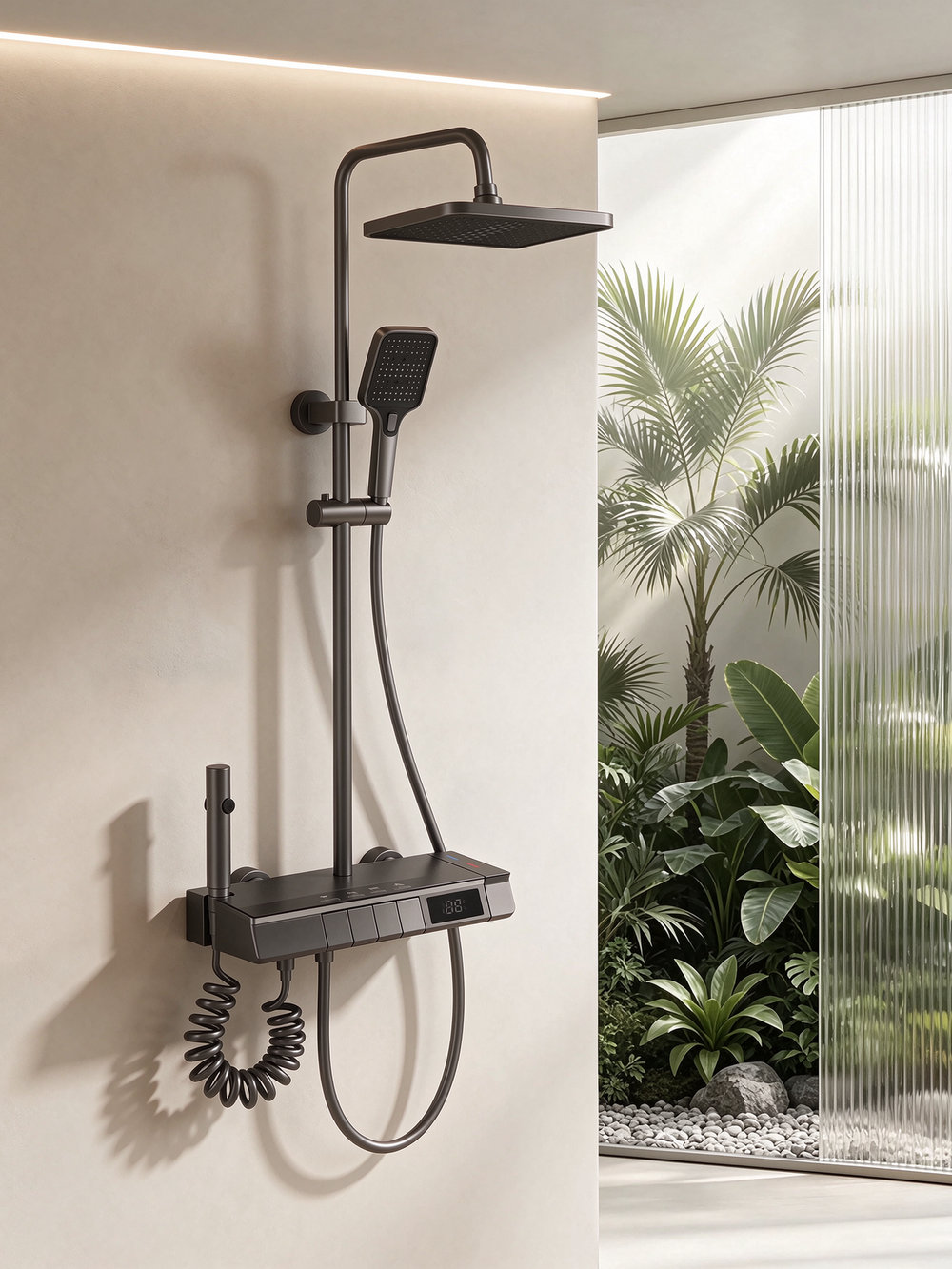
How to Source Shower Systems from China in 2026
Shower systems look simple on a specification sheet: a head, a hose, a mixer and a rail. In practice, two factories can quote the same model at prices 40% apart and both still make money — because the difference sits in the cartridge, the plating thickness, the brass content and the level of testing. This guide sets out the five checks that separate a reliable shower supplier from a cheap one, based on what we see when buyers audit our own workshop in Ningbo.
1. Confirm Who Actually Makes the Product
Many "shower factories" online are trading companies with a catalogue and a forwarding address. That is not automatically a problem, but you should know which one you are dealing with. A trading company cannot control your lead time when its own supplier is busy, and it often cannot explain why a finish changed between batches.
Ask for a live video tour of the polishing, plating and assembly areas — not a stock video. Ask how many moulds they own, who maintains them, and whether the water-test bench is on site. A factory that owns its moulds can usually give you a straight answer on tooling cost and exclusivity; a trader has to go and ask someone else.
This matters most for ODM. If you plan to develop a private platform, the mould ownership and maintenance arrangement should be written into the contract from the start.
2. Look at the Cartridge Before the Design
The cartridge is where most shower complaints originate. A thermostatic cartridge controls temperature; a ceramic cartridge controls flow and mixing. Both are available in a wide quality range, and the price difference between a 200,000-cycle cartridge and a 500,000-cycle cartridge is small at factory level — but the difference in after-sales cost is not.
Ask which cartridge brand and cycle rating is used, and whether replacement cartridges will be kept in stock for five years. For thermostatic models, ask about the safety stop and the temperature tolerance under pressure fluctuation. A supplier who cannot answer these questions is assembling, not engineering.
Also check the inlet filters and check valves. They cost very little, but they prevent debris and cross-flow problems that generate warranty claims in older buildings.
3. Verify the Finish, Not Just the Colour
Matte black and gunmetal have moved from premium niche to mainstream demand. The problem is that "matte black" can mean a properly PVD-coated surface or a thin paint layer that fails within a year in a humid bathroom.
Request a salt-spray test report and a plating thickness figure per batch. A reasonable specification for shower components is 24 hours of neutral salt spray without base-metal corrosion. Ask to see a sample that has been in the salt-spray chamber, not just a new one from the line.
If you are ordering multiple finishes, confirm that they come from the same tooling. Otherwise, subtle profile differences between chrome and black versions can create packaging and display problems at retail.
4. Check the Certificates That Affect Customs
CE and RoHS are the baseline for Europe. REACH declarations matter for metal and plastic components. For North America, cUPC is often requested by plumbing distributors and inspectors; for the UK, WRAS. None of these replace a proper test report, and a certificate without a report is of limited use when a customs officer or a retailer's quality team asks questions.
Ask for the test report number, the laboratory and the model list covered. Confirm whether the certificate covers your specific model and finish, not just a similar product. Certification is a project, not a sticker, and a good supplier will treat it that way.
5. Buy a Sample and Test It Like Your Customer Will
No document replaces a physical sample. Order two sets: one to inspect, one to install and use for a week. Check the weight and balance of the hand shower, the smoothness of the diverter, the fit of the hose nuts and the consistency of the finish at edges and joints.
Run the shower at low pressure as well as normal pressure. Many columns perform well at 0.3 MPa and poorly at 0.1 MPa, which is exactly the condition in older buildings and top-floor apartments. Check for drips after shut-off, and look at how the bracket holds the hand shower when the hose is pulled.
Finally, evaluate the supplier's sample process itself. Was the sample shipped on the promised date? Did the packaging protect it? Were questions answered specifically, or with brochure language? That behaviour is a preview of how production will run.
The cheapest shower set is rarely the cheapest programme. Cartridge failures, finish complaints and delayed containers all cost more than the few dollars saved per unit.
Conclusion
Sourcing shower systems is not complicated, but it rewards specific questions. Confirm who makes the product, specify the cartridge by rating, verify the finish with a report, check the certificates against your market, and test a sample under real conditions. Do those five things and most of the risk disappears before you place a deposit.
At Showermu, all five checks can be completed in one visit — mould shop, plating line, assembly and water-test bench are in the same building in Ningbo. We are happy to walk you through them on a video call, send samples, or quote against a specification you already have.
Ready to Start Your Shower Project?
Get a factory-direct quote, request samples or discuss a private mould. We reply within 4 business hours.
Contact Our Team